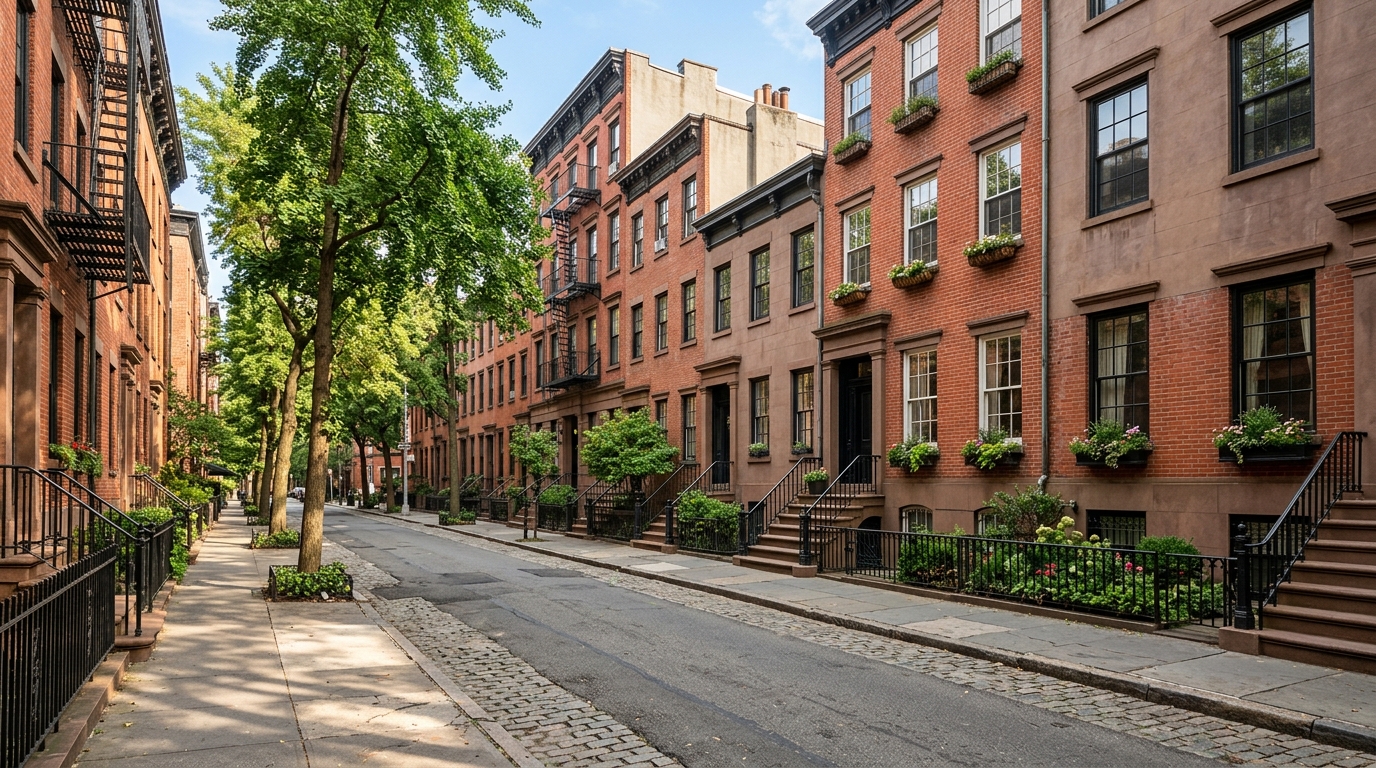
What is West Village like for home buyers and residents?
Use this guide to compare What is it like to live in West Village with local proof, decision criteria, source checks, and next steps. Local context: New York...
Tracie Golding is a Compass agent working the West Village, Greenwich Village, Tribeca, Flatiron, Meatpacking District, and West Chelsea, and the honest answer to what is it like to live in West Village comes down to a specific trade: you accept smaller, older, quirkier housing stock in exchange for the most intact low-rise streetscape left in Manhattan. New York, NY's West Village is the wedge of Greenwich Village west of Sixth Avenue, down to roughly Christopher and the Hudson River waterfront. Expect walk-up townhouses, prewar co-ops, and a limited supply of new condos. Expect to walk everywhere. The first thing to verify on any building is whether it's a co-op or condo, because that single fact reshapes your financing, board approval, and resale options.
Short Answer
New York, NY's West Village is a low-rise, highly walkable neighborhood west of Sixth Avenue in Greenwich Village, known for prewar townhouses, brownstone co-ops, and a smaller pool of new condos near the Hudson River and Meatpacking District. Daily life leans residential and pedestrian: narrow streets like Bedford, Grove, and Perry, ground-floor restaurants, and short blocks that break the Manhattan grid. Housing skews to walk-up buildings under six stories, so buyers should not assume an elevator or a doorman. Monthly costs run high because co-op maintenance and condo common charges carry building operations plus, for co-ops, the underlying mortgage and property tax. Older buildings need full systems replacement, not cosmetic updates: electrical wiring from the 1920s or 1940s does not meet current code, per Gallery KBNY (April 2026). Before you rely on any listing, verify the ownership structure (co-op versus condo), the building's financials, and whether it's a walk-up or elevator building, because those three facts determine your true cost and financing path. The single most important verification step: confirm co-op versus condo in writing before you tour, because it governs financing, board approval, and how quickly you can resell.
What Buyers Should Verify
New York, NY's West Village starts with a housing mix that is unlike almost anywhere else in Manhattan. The neighborhood is dominated by low-rise prewar buildings: brownstone and brick townhouses, small prewar co-ops of six to twelve units, and converted loft buildings near the western edge. New condo product exists but is limited and concentrated toward the Hudson River waterfront and the Meatpacking District, where developments have pushed prices to the top of the market.
Townhouses are the signature product here, and they are not the same asset as an apartment. A West Village townhouse is a single- or multi-unit building you own outright, which means no board, no monthly maintenance to a corporation, but full responsibility for the roof, facade, mechanicals, and Landmarks Preservation Commission compliance if the building sits in the Greenwich Village Historic District, which most of the West Village does. If you're weighing a townhouse against an apartment, read how buying a Manhattan townhouse works before you start touring, because the carrying math is entirely different.
Co-ops still make up the larger share of apartment inventory, and a co-op is not a condo. When you buy a co-op you buy shares in a corporation and a proprietary lease, not real property. A board must approve you, financing caps are common, and subletting is restricted in many buildings. Condos are deeded real estate with far looser resale and rental rules, which is why they command a premium. The distinction matters enough that I'd point every buyer to how Manhattan co-ops compare to condos before making an offer.
Walkability is the West Village's defining daily-life feature, and it's structural, not marketing. West of Sixth Avenue the Manhattan grid breaks down: Bedford, Grove, Barrow, Commerce, and Perry Streets bend and shorten, which slows traffic and gives the neighborhood its village feel. Groceries, restaurants, the Hudson River Park waterfront, and multiple subway lines at West 4th and Christopher Street sit within a short walk of most homes.
What To Verify Before Deciding
Before you rely on any West Village listing, confirm these decision factors in writing. Each one changes your true monthly cost or your ability to close and resell.
| Decision factor | What to check | Why it matters in the West Village |
|---|---|---|
| Ownership structure | Co-op, condo, or townhouse in the offering plan or deed | Co-ops require board approval and cap financing; condos allow easier resale and rentals; townhouses carry no board but full building liability |
| Walk-up vs. elevator | Building floor plan and number of stories | Most West Village buildings are under six stories and are walk-ups; assume stairs unless the listing confirms an elevator |
| Building financials | Co-op or condo audited statements, reserve fund, assessments | Small prewar buildings have small reserves; a facade or roof project can trigger a large assessment |
| Systems condition | Age of wiring, plumbing, and whether HVAC exists | Prewar systems from the 1920s to 1940s need full replacement, not upgrade, per Gallery KBNY (April 2026) |
| Landmarks status | Whether the building is in the Greenwich Village Historic District | Exterior work, windows, and stoops require Landmarks Preservation Commission approval, adding time and cost |
| Monthly carrying cost | Maintenance or common charges plus property tax | Review the NYC monthly costs guide to model the full picture, not just the mortgage |
The verification step buyers skip most often is the systems inspection on older apartments. Ask the seller's agent directly whether the wiring, drain lines, and supply lines have been replaced since original construction, and get the answer before, not after, you write an offer.
Local Proof And Decision Factors
New York, NY's West Village offers its clearest local proof of the trade-off in renovation cost, and it deserves a full accounting before you fall for a "great bones" listing. According to Gallery KBNY, a firm with completed prewar renovations on Fifth Avenue, Park Avenue, and Central Park West (April 2026), the most consistent characteristic of estate-condition prewar apartments is that everything behind the walls needs replacement, not updating. Electrical wiring from the 1920s or 1940s does not meet current code and is a fire risk. Plumbing from the same era is often cast iron drain lines and lead supply lines. That plumbing corrodes and cannot support modern fixtures. HVAC that resembles central climate control does not exist in most prewar buildings.
The offsetting decision factor is purchase price. The discount you capture on an estate-condition prewar apartment is your renovation budget in disguise: the money you save at purchase is money you'll redirect into systems the previous owner deferred. The buyers who do well here treat the price advantage as a construction escrow, not a savings.
New-development condos in and near the West Village solve the systems problem but introduce a different one: tax abatements and their eventual cliffs. New York's 421-a tax abatement program expired on June 15, 2022, per manhattanmiami.com (2026), though buildings that qualified before the deadline continue to receive benefits. Some carry 20- and 25-year abatements running into the 2040s, which lowers early-year taxes but steps up over time. If a condo you're considering advertises an abatement, get the phase-out schedule in writing and model the year the taxes reset, because that number, not the introductory figure, is your real long-term cost.
Deciding between the West Village and its neighbors comes down to concrete trade-offs, not vibe. Greenwich Village proper, east of Sixth Avenue, gives you more retail density, NYU's footprint, and a slightly different building mix; see how Greenwich Village compares with the West Village for the buyer-level breakdown. Tribeca, to the south, trades the village streetscape for larger loft floorplans, more full-service condos, and generally higher price-per-square-foot; the Tribeca versus West Village comparison lays out the size-and-service trade in detail. The West Village wins on charm and walkability and loses on unit size, elevators, and doorman coverage. If those amenities top your list, start your search in Tribeca or West Chelsea instead.
A practical decision rule: if your non-negotiables are a large modern floorplan, an elevator, and a full-time doorman, the West Village will frustrate you, and you should look at Tribeca or the newer Hudson River waterfront condos. If your non-negotiables are quiet historic streets, low-rise scale, and walk-everywhere daily life, the West Village delivers what almost no other Manhattan neighborhood can, and you should budget for the walk-up and the renovation.
For the full neighborhood picture including current inventory patterns, the West Village neighborhood overview and this West Village buyer guide are the two pages I'd read alongside this one.
Reviewed for freshness: July 2026.
Work With Tracie Golding in New York, Ny
Tracie Golding helps buyers and sellers weigh neighborhoods against commute, budget, and daily-routine fit. The service area covers Tribeca, West Village, Greenwich Village, Flatiron, Meatpacking District, and West Chelsea, and the next conversation can turn school-boundary checks, HOA or metro-district tolerance, and current inventory into a shortlist worth touring.
- Service areas: Tribeca, West Village, Greenwich Village, Flatiron, Meatpacking District, West Chelsea, lower East Side, and Upper East Side.
- Office or service-area location: 110 5th Avenue New York, NY 10011.
- Phone: (917) 837-1918
- Email: tgolding@compass.com
- Contact: https://traciegolding.com/contact
Frequently Asked Questions
New York, NY's West Village raises recurring buyer questions, and the answers below draw on the same verified facts covered above, including the 421-a program's June 15, 2022 expiration per manhattanmiami.com.
Is the West Village mostly co-ops, condos, or townhouses?
Co-ops make up the majority of the residential inventory, particularly in pre-war buildings along the side streets. Condos exist but are less common and carry a meaningful price premium. Townhouses, some single-family, some carved into apartments, give the neighborhood its visual character, though purchasing a full townhouse puts you at the higher end of the market.
What is the difference between the West Village and Greenwich Village for buyers?
The West Village refers to the area west of Seventh Avenue South, where the street grid breaks into the irregular, angled pattern that defines the neighborhood's feel. Greenwich Village to the east runs on a more conventional grid and has a slightly different architectural mix, with more large prewar elevator buildings near Washington Square Park. For buyers, the distinction matters because the West Village's smaller, irregular blocks produce more boutique buildings and rowhouse-scale properties, which affects both availability and board culture.
What should I check about a West Village building before making an offer?
For a co-op, request the last two years of board meeting minutes, the most recent financial statements, and the underlying mortgage status; an underfunded reserve or a large underlying mortgage can affect your financing options and future maintenance. For a condo, review the offering plan and any amendments alongside the reserve fund balance. The building's alteration agreement also matters if you're considering any renovation work, since restrictions vary considerably from one building to the next.
Are West Village apartments walk-ups or elevator buildings?
Both exist in meaningful numbers. Many of the smaller townhouse-conversion buildings are walk-ups of four to six stories, which is a real day-to-day consideration if you're on an upper floor. Larger prewar buildings along the avenues are more likely to have elevators. Whether a walk-up is acceptable depends on your lifestyle and the floor: a parlor-level unit in a walk-up reads very differently than a fifth-floor apartment in the same building.
What renovation costs should I plan for in an older West Village apartment?
Older West Village apartments frequently have original plumbing and electrical systems that need updating before a full renovation can proceed, and those infrastructure upgrades add cost that isn't always visible in a gut renovation estimate. Electrical wiring from the 1920s or 1940s does not meet current code, per Gallery KBNY (April 2026). If the building is landmarked or sits within a historic district, exterior modifications require Landmarks Preservation Commission approval, which can extend timelines. A realistic approach is to budget separately for structural or system surprises once walls are opened, rather than assuming the scope visible at inspection is the complete scope.
Let’s talk about your block, building, apartment
The right starting move is a conversation with the right broker.
The Right Broker Makes All The Difference